Optimex
Canned Motor Pumps: Working Principle, Applications and Selection
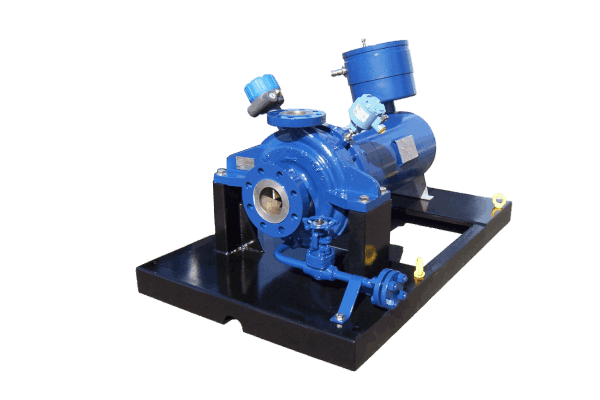
Canned motor pumps are sealless centrifugal pumps designed to handle hazardous, toxic, flammable, volatile, corrosive, high-temperature, cryogenic, and other critical process fluids where reliable containment is essential.
Unlike conventional centrifugal pumps, a canned motor pump integrates the pump and electric motor into a single hermetically contained assembly. With no rotating shaft passing through the pressure boundary and no mechanical seal, this design eliminates a major potential leakage path and helps reduce fugitive emissions, maintenance requirements, and risks to personnel and the environment.
Canned motor pump technology is widely used in demanding chemical, petrochemical, oil and gas, energy, cryogenic, nuclear, and other critical industrial applications. Depending on the service conditions, pumps can be engineered in horizontal, vertical, submerged, single-stage, multistage, self-priming, high-pressure, or extreme-temperature configurations.
Selecting the appropriate canned motor pump requires more than determining flow rate and total dynamic head. Fluid properties, vapor pressure, available NPSH, operating temperature and pressure, materials, internal cooling and bearing lubrication, hazardous-area classification, electrical requirements, and applicable standards such as API 685 and ISO 15783 must also be considered.
Canned Pumps Definition
What Is an Industrial Canned Motor Pump and How Does It Work?
A canned motor pump is a type of sealless centrifugal pump in which the hydraulic section and electric motor are integrated into a single hermetically contained unit.
Designed without a dynamic shaft seal, this technology provides reliable fluid containment for hazardous and critical industrial applications.
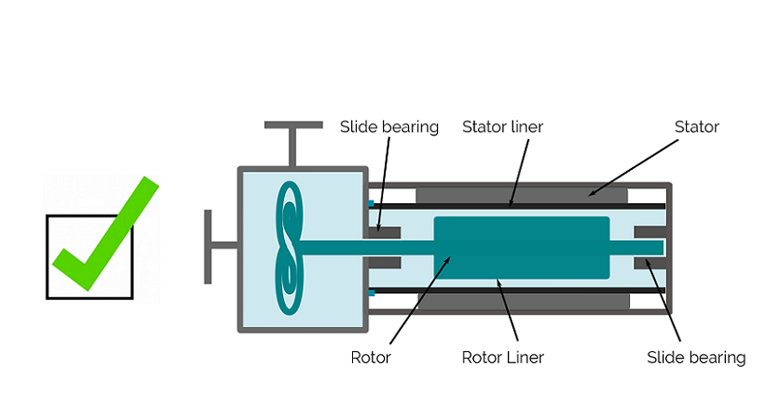
Its operation relies on an immersed rotor, an isolated stator, hydrodynamic bearings, and a carefully engineered internal cooling and lubrication circuit.
In a canned motor pump, the impeller is directly connected to the motor rotor.
No rotating shaft passes through the pressure-retaining casing, eliminating the need for the dynamic mechanical seal found in a conventional centrifugal pump. This sealless pump design removes a major potential leakage path and helps limit fugitive emissions.
The rotor operates immersed in the pumped liquid or, for certain applications, in a separate compatible motor fluid. The energized stator is protected from the liquid by a thin, corrosion-resistant stator liner, also known as the motor can.
A controlled circulation circuit removes heat from the motor and lubricates the sleeve and thrust bearings. Its design depends on the fluid’s viscosity, vapor pressure, lubricating properties, temperature, solids content, chemical compatibility, and crystallization risk. Depending on the service conditions, the pump may use internal, filtered, cooled, or externally supplied circulation arrangements engineered in accordance with applicable API 685 requirements.
The main components of an industrial canned motor pump include:
- a centrifugal hydraulic section,
- an impeller,
- an integrated canned electric motor,
- a rotor and stator,
- a leak-tight stator liner,
- hydrodynamic sleeve and thrust bearings,
- an internal cooling and bearing-lubrication circuit,
- a pressure-retaining casing,
- a secondary containment boundary.
Together, these components create a compact hermetically sealed centrifugal pump engineered for reliable containment and leak-free fluid handling under normal operating conditions. This construction is particularly suitable for transferring toxic, flammable, volatile, corrosive, high-pressure, and other hazardous process fluids.
Canned Pump Applications
Why Use a Canned Motor Pump for Hazardous and Critical Fluids?
A canned motor pump provides a safe and reliable fluid-handling solution when process containment is a critical requirement.
Its sealless design, integrated motor construction, and secondary containment make it particularly suitable for transferring hazardous fluids in demanding chemical, petrochemical, energy, nuclear, and other industrial processes.
Unlike a conventional centrifugal pump, a sealless canned motor pump has no mechanical shaft seal and no rotating shaft passing through the pressure-retaining casing.
Eliminating this dynamic sealing point significantly reduces the risk of process fluid leakage and helps limit fugitive emissions.
The pumped liquid is contained within the primary pressure boundary. The stator liner and motor housing provide an additional containment barrier designed to protect personnel and the environment if the primary liner is damaged. This double-containment pump design supports leak-free operation under normal operating conditions and improves process safety where fluid containment is essential.
Canned motor pumps for hazardous fluids are engineered to safely transfer liquids that could present serious health, fire, explosion, or environmental risks if released. Typical services include:
- toxic chemicals and CMR substances,
- solvents and volatile organic compounds,
- flammable and low-boiling-point liquids,
- liquefied gases,
- corrosive process chemicals,
- radioactive fluids,
By preventing direct leakage paths and reducing fugitive emissions, a hermetically sealed centrifugal pump helps protect operators, production facilities, and the surrounding environment. It can also support stringent process-containment requirements in hazardous areas, subject to the applicable project specifications and certifications.
Because there is no mechanical seal to inspect or replace, maintenance associated with seal wear, flushing systems, and leakage can be reduced. The integrated pump-and-motor assembly also eliminates the external coupling and the need for pump-to-motor alignment during installation.
This compact configuration simplifies integration where space is limited and reduces the number of external rotating components. Properly selected for the fluid and operating conditions, an industrial canned motor pump provides dependable operation for continuous processes and other critical fluid-handling applications where reliability, containment, and reduced maintenance are priorities.
Canned Pump
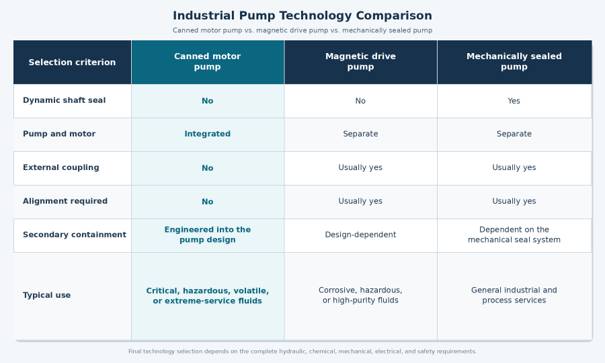
Canned Motor Pump vs. Magnetic Drive Pump vs. Mechanically Sealed Centrifugal Pump
Selecting the right industrial centrifugal pump requires more than comparing flow rate, head, or purchase price.
The decision must also consider process-fluid hazards, operating pressure and temperature, fugitive-emissions requirements, maintenance strategy, available installation space, and applicable US standards.
Canned motor pumps, magnetic drive pumps, and mechanically sealed pumps each offer specific advantages depending on the operating conditions.
A canned motor pump for hazardous fluids should be considered when process-fluid containment is a primary safety, environmental, or production requirement. It is particularly suitable when:
- process-fluid release must be prevented under normal operating conditions,
- the liquid is toxic, flammable, volatile, radioactive, or costly,
- fugitive emissions are strictly limited,
- the pump operates in a classified hazardous location,
- pressure or temperature conditions are severe,
- installation space is limited,
- mechanical seal flushing, monitoring, or replacement is problematic,
- continuous process reliability is essential,
Its integrated pump-and-motor assembly eliminates the dynamic shaft seal, external coupling, and field alignment. This compact hermetically contained pump design can therefore reduce potential leakage paths and simplify installation and maintenance in critical industrial services.
A mechanically sealed centrifugal pump uses a rotating shaft that passes through the pump casing. A mechanical seal controls leakage at this dynamic interface, but it remains subject to wear and may require flushing, cooling, monitoring, and periodic replacement.
A canned motor pump eliminates both the shaft penetration and the mechanical seal. Its integrated, hermetically contained construction reduces potential leakage paths, fugitive emissions, seal-related maintenance, and pump-to-motor alignment requirements.
Mechanically sealed pumps remain suitable for many general industrial services, particularly when fluids are non-hazardous and conventional maintenance is acceptable.
Sealless canned motor pumps are generally preferred when handling toxic, flammable, volatile, radioactive, high-temperature, or high-pressure fluids for which containment and operational safety are critical.
Both technologies are sealless centrifugal pumps, but they transmit motor power differently. A canned motor pump uses an immersed rotor directly connected to the impeller. A magnetic drive pump uses a separate electric motor and magnetic coupling to transmit torque through a containment shell.
Selection must consider:
- fluid viscosity, lubricity, vapor pressure, and solids content,
- crystallization or polymerization risk,
- operating and design pressure,
- minimum and maximum temperature,
- required motor power and torque,
- internal cooling and bearing-lubrication requirements,
- primary and secondary containment strategy,
- inspection and maintenance philosophy,
- hazardous-area and electrical requirements,
- applicable standards, including API 685 and ISO 15783,
Neither canned motor pump technology nor magnetic-drive technology is universally superior. The appropriate sealless pump depends on the complete hydraulic, chemical, mechanical, electrical, and safety requirements of the application.
API 685 officially covers both canned motor and magnetic-drive sealless centrifugal pumps for petroleum, petrochemical, and gas-industry process service.
Hazardous Fluids & Critical Applications
Canned Motor Pumps for Hazardous Fluids and Critical Industrial Applications
Industrial canned motor pumps are engineered for process fluids whose toxicity, flammability, volatility, temperature, pressure, or environmental impact requires reliable containment.
Their sealless construction supports the safe transfer of difficult liquids across critical US industrial applications.
Canned motor pumps for chemicals can handle acids, bases, solvents, chlorinated compounds, toxic intermediates, specialty chemicals, and carcinogenic, mutagenic, or reproductive toxicants. Wetted materials, bearings, gaskets, and the internal circulation plan must be selected according to corrosion, lubricity, crystallization, and solids risks.
This makes sealless chemical pumps suitable for services where fugitive emissions and operator exposure must be minimized.
Hermetically sealed pumps are used for hydrocarbons, LPG, volatile organic compounds, low-boiling liquids, and gases handled in their liquefied phase.
Maintaining sufficient pressure and controlling internal heat generation help prevent flashing, vapor formation, cavitation, and loss of bearing lubrication.
High-temperature canned motor pumps can be used for thermal oils, heat-transfer fluids, hot process liquids, and other services where elevated temperatures create demanding material, cooling, and bearing-lubrication requirements.
High-pressure process fluids and certain supercritical-fluid applications may require dedicated hydraulic design, materials, motor cooling, bearing lubrication, and internal circulation arrangements according to the operating conditions.
Special configurations are available for extremely low-temperature liquids and radioactive services requiring enhanced containment, material compatibility, monitoring, and traceability.
These industrial sealless pumps serve chemical processing, petrochemical plants, refineries, oil and gas facilities, LNG and industrial-gas installations, power-generation sites, and nuclear facilities.
Other specialized applications include marine, space, and safety-critical systems where compact pump design, reliable containment, and operation under severe or non-standard conditions may be required.
Canned Pump Configurations
Canned Motor Pump Configurations for Industrial Applications
Industrial canned motor pumps are available in multiple configurations to match process layout, suction conditions, required head, fluid properties, and installation space.
The appropriate configuration depends on the hydraulic duty, process layout, suction conditions, fluid properties, available NPSH, installation constraints, and required operating range.
Horizontal canned motor pumps provide a compact arrangement for skid-mounted units and conventional process installations.
Vertical canned motor pumps suit restricted floor space and installations in or above tanks, vessels, sumps, pits, or charge barrels.
Submerged canned motor pumps operate within the liquid inventory, reducing external equipment. Orientation and inlet geometry are selected according to vessel depth, suction pressure, available NPSH, and vaporization risk.
- Single-stage canned motor pumps are typically selected for industrial fluid transfer requiring moderate differential head,
- Multistage canned motor pumps use several impellers in series to generate higher total dynamic head,
- Self-priming or side-channel canned motor pumps can be used for installations where the pump is located above the suction vessel and can evacuate air from the suction line after the required initial filling.
High-pressure canned motor pumps and extreme-temperature canned motor pumps are used for demanding process conditions involving high static pressures, hot liquids, cryogenic fluids, corrosive media, or other severe services.
These operating conditions require appropriate hydraulic design, materials, motor cooling, bearing lubrication, and internal circulation arrangements.
Specific engineered units can reach design pressures up to 5,800 psi (400 bar); this is a project-dependent capability, not the standard range of every pump.
Canned Pump Choice
How to Select and Size a Canned Motor Pump
Selecting the right industrial canned motor pump requires a complete analysis of the hydraulic duty, process fluid, materials, electrical supply, hazardous-area classification, and protection requirements.
Proper canned motor pump sizing is essential to maintain hydraulic performance, motor cooling, bearing lubrication, and reliable fluid containment.
Selection begins with the required flow rate and total dynamic head at the specified operating point.
Suction pressure and net positive suction head available (NPSHA) must be compared with the pump’s NPSH requirement, including an appropriate engineering margin, to reduce cavitation and vaporization risks.
The complete operating range – not only the rated point – must be evaluated against the pump curve, preferred operating region, minimum continuous stable flow, and maximum allowable flow.
Continuous or intermittent duty also influences hydraulic sizing, motor temperature rise, and bearing operating conditions.
Fluid density, viscosity, vapor pressure, and lubricating properties directly affect hydraulic performance, absorbed motor power, internal cooling, and hydrodynamic bearing lubrication.
Canned motor pump selection must also consider:
- operating and design temperatures,
- operating and design pressures,
- solids and particle content,
- corrosion and chemical compatibility,
- crystallization, polymerization, or freezing risks,
- flashing and vaporization risks,
These parameters determine the hydraulic design, bearing materials, clearances, motor sizing, and internal circulation plan used to cool the motor and lubricate the bearings.
The selection of wetted materials must provide suitable corrosion resistance throughout the specified service life. Motor power must account for fluid density, viscosity, operating range, and required hydraulic duty.
For the US market, the pump must be engineered for the specified voltage, frequency, and 60 Hz operation, as well as applicable US electrical requirements.
Variable frequency drive compatibility should be confirmed when speed control is required, particularly regarding motor cooling, minimum speed, bearing lubrication, and allowable operating range.
For hazardous locations, the project specification should define the applicable Class/Division or Zone classification, temperature class, and gas group.
Relevant UL and CSA requirements must also be reviewed according to the selected motor and pump configuration.
Depending on application criticality, protection may include dry-running detection, winding or fluid-temperature monitoring, bearing-wear monitoring, motor-power monitoring, and process instrumentation for pressure, flow, or level. These devices help detect abnormal operating conditions before they affect the sealless pump, bearings, motor, or process containment.
US Market Canned Pumps
API 685 Canned Motor Pumps for the US Market
For US projects, canned motor pump specifications must combine process-pump standards, hazardous-location requirements, piping interfaces, and owner-specific engineering practices.
The applicable requirements depend on the hydraulic duty, process-fluid hazards, operating conditions, installation location, hazardous-area classification, and required certification level.
- API 685 canned motor pumps are designed for sealless centrifugal pump services in the petroleum, petrochemical, refining, and natural-gas industries. The standard establishes technical requirements covering pump construction, pressure containment, materials, bearings, internal circulation, testing, inspection, instrumentation, and documentation.
- ISO 15783 provides complementary requirements for canned motor and magnetic-drive rotodynamic pumps used primarily in chemical processing, water treatment, and petrochemical applications. The applicable standard is combined with purchaser specifications, process data sheets, hazardous-area requirements, inspection plans, and project-specific testing criteria.
For integration into US piping systems, suction and discharge connections can be supplied in accordance with applicable ASME requirements, including ASME B16.5 flanges with the required pressure class, facing, material group, and pressure-temperature rating.
For North American installations, the electrical and hazardous-location assessment begins with applicable UL requirements, followed by CSA requirements, according to the specified Class/Division or Zone, gas group, temperature class, voltage, and frequency.
IECEx certification may be required for international projects, while ATEX certification applies primarily to equipment intended for explosive atmospheres within the European Economic Area.
Available markings and certifications can vary according to the canned motor pump configuration, motor design, hazardous-location classification, and project requirements.
Certification should therefore not be assumed to be identical across all pump configurations.
The exact listing, marking, protection concept, certificate scope, and compatibility with the selected configuration must be confirmed during project review.
Requirements outside an existing certification scope may be evaluated through project-specific engineering and certification procedures.
Need Help Selecting a Canned Motor Pump for Your Application?
Selecting the right canned motor pump requires a detailed evaluation of fluid properties, flow rate, total dynamic head, NPSH, operating and design pressure and temperature, materials, hazardous-area requirements, electrical requirements, and applicable standards.
For applications involving hazardous, toxic, flammable, volatile, corrosive, cryogenic, radioactive, high-pressure, or extreme-temperature fluids, these parameters should be evaluated together to determine the appropriate pump configuration.
Looking for a Canned Motor Pump Manufacturer?
Discover OPTIMEX engineering, manufacturing, testing, replacement, and retrofit capabilities for custom canned motor pump projects.