Optimex
Cryogenic Pumps for LNG, Liquid Hydrogen and Industrial Gases
Cryogenic pumps are specifically engineered to transfer and handle liquefied gases at extremely low temperatures, where conventional pumping technologies may face challenges related to vaporization, low available NPSH, thermal contraction, low fluid viscosity and ma
These pumps are used across a wide range of cryogenic applications involving liquefied natural gas (LNG), liquid hydrogen (LH2), liquid nitrogen (LN2), liquid oxygen (LOX), liquid argon (LAr) and other liquefied or refrigerated gases.
Because cryogenic liquids are often stored and transferred close to their boiling point, pump selection cannot be based on flow rate and pressure alone. Operating temperature, vapor pressure, Total Dynamic Head (TDH), available NPSH, heat input, material compatibility, suction conditions and installation configuration must all be considered to maintain stable liquid conditions and reliable pump operation.
Different applications also create different pumping requirements.
LNG storage and transfer, hydrogen infrastructure, Air Separation Units (ASUs), industrial gas production, aerospace testing and cryogenic propellant systems each impose specific hydraulic, thermal, mechanical and containment constraints.
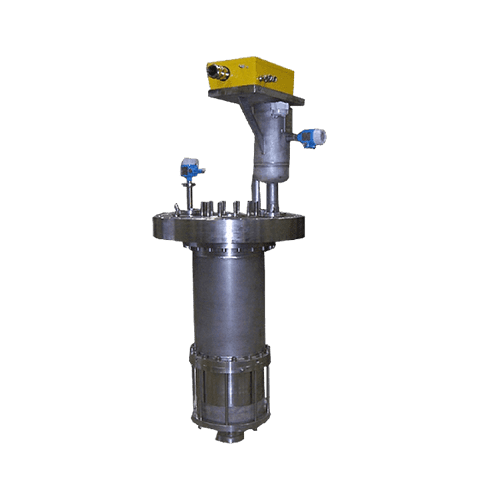
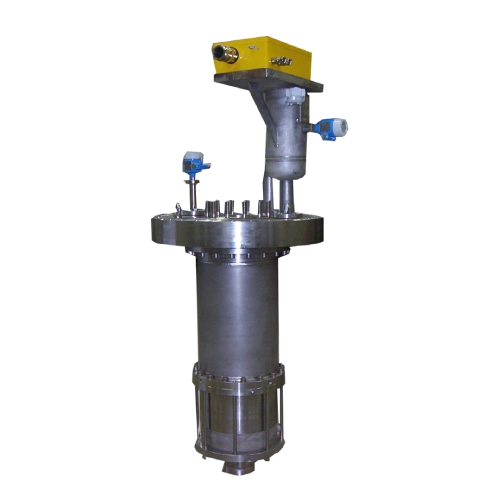
Industrial Cryogenic Pumps
Industrial Cryogenic Pumps for Safe and Reliable Liquid Transfer
Cryogenic pumping requires equipment specifically engineered to handle liquefied gases and cryogenic fluids at extremely low temperatures.
Unlike conventional industrial liquid transfer, cryogenic service involves fluids operating close to their boiling point, creating specific challenges related to vaporization, low available NPSH, thermal contraction, low viscosity, material behavior and fluid containment.
OPTIMEX industrial cryogenic pumps are engineered for demanding cryogenic transfer applications involving LNG and liquefied gases, including liquid nitrogen, liquid oxygen, liquid argon and other low-temperature process fluids.
The pump design must consider not only the required flow rate and head, but also the thermodynamic properties of the cryogenic liquid, operating temperature, vapor pressure, suction conditions and installation configuration.
A cryogenic pump is a pump specifically designed to transfer, circulate or handle fluids maintained at extremely low temperatures, typically liquefied gases that must remain below their boiling point to stay in liquid form.
Common cryogenic fluids used in industrial processes include liquefied natural gas (LNG), liquid nitrogen (LN2), liquid oxygen (LOX), liquid argon (LAr) and other liquefied or refrigerated gases.
Unlike conventional process liquids, cryogenic fluids can be particularly sensitive to temperature and pressure variations.
Even a small heat input or pressure drop within the pumping system may cause part of the liquid to vaporize.
This makes cryogenic liquid transfer highly dependent on the relationship between:
- operating temperature and pressure,
- fluid vapor pressure,
- available Net Positive Suction Head (NPSHa),
- required Net Positive Suction Head (NPSHr),
- flow rate and total dynamic head,
- heat input into the fluid,
- pump and piping configuration,
The purpose of a properly engineered cryogenic pumping system is therefore not simply to move the liquid from one point to another.
It must maintain stable hydraulic and thermal conditions throughout the pumping process while minimizing vapor formation and ensuring safe containment of the cryogenic fluid.
These requirements make cryogenic pump selection particularly important for applications such as LNG transfer, industrial gas processing, Air Separation Units (ASUs), cryogenic storage and transfer systems, hydrogen infrastructure, aerospace and space applications.
Pumping cryogenic liquids creates a combination of hydraulic, thermal and mechanical constraints that must be considered during pump sizing and engineering.
* Low NPSH and Vaporization
Many cryogenic liquids operate close to their saturation conditions. A pressure drop at the pump inlet can therefore cause localized vaporization, potentially affecting pump performance and operating stability.
Maintaining adequate NPSH margin is a key consideration when selecting a cryogenic pump, particularly for storage tanks and applications where the available liquid head may be limited.
Pump inlet design, suction conditions and installation configuration must therefore be evaluated together to reduce the risk of flashing, vapor formation and cavitation.
* Thermal Balance and Heat Input
Heat entering a cryogenic liquid can cause partial vaporization or increase the amount of vapor present in the system.
For this reason, thermal balance is a critical aspect of cryogenic pump engineering. Heat generated by the motor, hydraulic losses and external heat transfer must be considered in relation to the thermodynamic properties and operating conditions of the pumped fluid.
Proper thermal management helps maintain the fluid in the required liquid state and supports stable pump operation.
* Thermal Contraction and Material Compatibility
Materials behave differently at cryogenic temperatures. Components may experience significant thermal contraction, while some materials can lose ductility or become unsuitable for extreme low-temperature service.
The selection of metals, internal components, insulation systems and other pump materials must therefore consider both cryogenic temperature resistance and chemical compatibility with the pumped fluid.
Dimensional changes caused by cooling must also be taken into account when defining internal clearances and mechanical tolerances.
* Low-Viscosity Cryogenic Liquids
Many liquefied gases have very low viscosity compared with conventional industrial process fluids.
This affects internal leakage, hydraulic behavior, lubrication conditions and pump efficiency. Cryogenic pump design must therefore account for the specific physical properties of each liquid rather than treating all cryogenic fluids as having identical pumping characteristics.
* Safe Cryogenic Fluid Containment
Containment is particularly important when handling flammable, oxidizing, volatile or potentially hazardous liquefied gases.
Conventional rotating equipment using dynamic shaft seals introduces a potential leakage point between the pumped fluid and the surrounding environment.
A sealless cryogenic pump or canned motor cryogenic pump eliminates the dynamic shaft seal by integrating the pump and motor into a hermetically contained design.
This configuration can be particularly valuable for critical cryogenic applications where leak prevention, fluid containment, reliability and reduced maintenance requirements are major pump selection criteria.
Gas Storage & Transfer
LNG Pumps for Liquefied Natural Gas Storage and Transfer
LNG pumps are critical components throughout liquefied natural gas storage, transfer and handling systems.
Because LNG is maintained at approximately -260°F at atmospheric pressure, pumping equipment must be specifically engineered for cryogenic service and designed to manage the thermal, hydraulic and containment challenges associated with liquefied natural gas.
OPTIMEX develops cryogenic pumps for LNG applications where reliable liquid transfer, low NPSH requirements and secure fluid containment are essential.
Depending on the process and installation requirements, cryogenic pumping solutions can be engineered for LNG storage tanks, transfer systems, loading and unloading operations and other liquefied natural gas handling applications.
The use of sealless and canned motor pump technology eliminates the conventional dynamic shaft seal and provides an integrated pump-and-motor configuration particularly suited to critical LNG service.
LNG transfer pumps are used to move liquefied natural gas between storage, processing and transportation systems while maintaining the fluid under the required cryogenic conditions.
Depending on the facility and process configuration, LNG pumping applications may include:
- transfer between LNG storage tanks,
- LNG tank filling and withdrawal,
- transfer from storage to downstream process equipment,
- LNG circulation and recirculation,
- loading and unloading operations,
- transfer to vaporization or regasification systems,
- LNG handling within terminals and industrial facilities,
Selecting an LNG transfer pump requires careful consideration of flow rate, total dynamic head, operating pressure, LNG temperature, vapor pressure, available NPSH and the configuration of the storage and transfer system.
Because LNG is stored close to its boiling point, pressure losses or excessive heat input can lead to flashing and vapor formation. Pump hydraulics, suction conditions and thermal behavior must therefore be evaluated together to maintain stable operation.
For LNG terminals, storage facilities and industrial installations, pump reliability is also a major consideration. Equipment may be expected to operate under demanding conditions while minimizing leakage risks, maintenance requirements and potential interruptions to LNG handling operations.
Submersible LNG pumps provide an effective solution for transferring liquefied natural gas directly from cryogenic storage tanks.
Unlike a conventional external pump installation, a submersible cryogenic pump can be installed directly inside the LNG storage tank and immersed in the pumped liquid.
OPTIMEX has developed a fully submerged canned motor pump configuration in which the pump and electric motor operate within the cryogenic liquid. This architecture allows the pumping system to be integrated into the storage tank while eliminating the need for a conventional rotating shaft penetration and dynamic shaft seal.
An in-tank configuration can provide several advantages for LNG storage and transfer applications:
- direct installation within the LNG storage tank,
- reduced need for liquid connections at the bottom of the tank,
- improved containment of the cryogenic liquid,
- reduced external piping associated with pump suction,
- operation under challenging suction conditions,
- suitability for applications with low available NPSH,
- ability to support low liquid-level operation depending on pump configuration,
For applications where suction conditions are particularly demanding, hydraulic design can also incorporate an inducer to reduce the pump’s NPSH requirements.
This type of in-tank LNG pump configuration can be particularly relevant for LNG storage facilities and other cryogenic tank applications where minimizing external leakage paths and maintaining efficient liquid withdrawal are important design considerations.
A sealless LNG pump eliminates one of the potential leakage points found in conventional centrifugal pump designs: the dynamic mechanical shaft seal.
In a canned motor LNG pump, the pump and motor form an integrated hermetically contained unit. There is no conventional shaft seal between the pump casing and the external environment.
This architecture offers significant advantages when handling a volatile and flammable cryogenic fluid such as LNG.
The absence of a dynamic mechanical seal helps:
- minimize potential LNG leakage paths,
- improve fluid containment,
- reduce maintenance associated with mechanical seals,
- provide a compact pump-and-motor arrangement,
- support submerged or specialized cryogenic configurations,
- improve reliability for critical LNG transfer applications,
OPTIMEX cryogenic technology uses a wet-stator motor design in which the stator and rotor operate immersed in the pumped cryogenic liquid. This differs from conventional canned motor designs using a stator liner or can between the fluid and the stator.
For cryogenic service, this architecture allows the pumped liquid to participate directly in motor cooling while avoiding a conventional mechanical seal.
The combination of sealless pump technology, cryogenic engineering and submerged pump configurations makes canned motor technology particularly relevant for demanding LNG applications where containment, low-temperature performance and operational reliability are key project requirements.
Liquid Hydrogen
Liquid Hydrogen Pumps (LH2) for Cryogenic Hydrogen Applications
Liquid hydrogen pumps are required for some of the most demanding cryogenic applications due to the extremely low boiling point, low density and unique physical properties of hydrogen.
Liquid hydrogen (LH2) must be maintained at approximately -423°F at atmospheric pressure to remain in liquid form. These extreme operating conditions create specific requirements for cryogenic pump design, materials, thermal management, NPSH and fluid containment.
As the hydrogen economy develops, reliable cryogenic pumping technologies are increasingly relevant across the hydrogen value chain, from liquefaction and storage to transfer, distribution and specialized industrial applications.
OPTIMEX‘s experience in sealless pump technology, cryogenic fluid handling and engineered pumping solutions provides a strong technological foundation for addressing demanding low-temperature applications. Each project must be evaluated according to the specific fluid properties, operating temperature, pressure, flow rate, installation configuration and applicable safety requirements.
Liquid hydrogen pumps, also referred to as LH2 pumps or cryogenic hydrogen pumps, are designed to transfer hydrogen maintained in its liquid state at extremely low temperatures.
The use of liquid hydrogen can be relevant when high-volume hydrogen storage or transportation is required. Liquefaction significantly reduces the volume of hydrogen compared with its gaseous state, but creates demanding cryogenic storage and handling requirements.
Depending on the process and facility, cryogenic pumps for liquid hydrogen may be required at different stages of the hydrogen value chain, including:
- hydrogen liquefaction facilities,
- liquid hydrogen production systems,
- cryogenic hydrogen storage,
- transfer between LH2 storage tanks,
- tank filling and withdrawal,
- loading and unloading systems,
- hydrogen distribution infrastructure,
- industrial hydrogen facilities,
- aerospace applications,
- space and cryogenic propulsion systems.
Pumping liquid hydrogen presents engineering challenges beyond those encountered with many conventional cryogenic liquids.
At approximately -423°F at atmospheric pressure, LH2 operates at one of the lowest temperatures encountered in industrial cryogenic service. Pump design must therefore account for the thermodynamic, hydraulic, mechanical and safety characteristics of hydrogen throughout the complete operating envelope.
* Extremely Low Operating Temperature
The very low temperature of liquid hydrogen places significant demands on pump materials and components.
Metals, electrical components, cables and other materials used in the pumping system must be evaluated for their behavior at cryogenic temperatures. Thermal contraction and changes in material properties must also be considered when defining internal clearances, tolerances and component interfaces.
* Low Density and Low Viscosity
Liquid hydrogen has both very low density and very low viscosity, characteristics that directly influence pump hydraulics and mechanical design.
Low viscosity can affect internal leakage, bearing behavior, hydraulic efficiency and lubrication conditions. The pump therefore has to be engineered around the actual physical properties of LH2 rather than simply adapting a conventional process pump to a lower operating temperature.
* Vapor Pressure, Heat Input and Vaporization
Managing heat input is particularly important in liquid hydrogen pumping systems.
Heat transferred to the cryogenic liquid through the pump, motor or surrounding environment can contribute to vapor formation and boil-off gas (BOG).
The hydraulic and thermal behavior of the complete pump must therefore be evaluated to limit unwanted vaporization and maintain stable liquid conditions.
OPTIMEX already applies this principle to its cryogenic engineering: its current cryogenic pump selection process uses a thermal balance to verify the proposed pump design and avoid internal vaporization.
* NPSH and Suction Conditions
As with other liquefied gases operating close to their boiling point, suction conditions are a critical consideration.
Available Net Positive Suction Head (NPSHa) must be evaluated against pump requirements to limit flashing, cavitation and unstable hydraulic operation.
Tank pressure, liquid level, piping losses, fluid temperature and pump location can all affect available NPSH and must therefore be considered during the engineering phase.
* Hydrogen Containment and Safety
Hydrogen is highly flammable and its small molecular size makes leak prevention and containment particularly important considerations in equipment design.
Conventional pumps using a rotating shaft and mechanical seal introduce a dynamic sealing interface.
Sealless pump technology removes this dynamic shaft seal, reducing potential leakage paths and providing an architecture that can be considered for critical hydrogen handling applications.
OPTIMEX specializes in sealless pump technologies and develops cryogenic wet-stator designs without dynamic seals or mechanical seals for low-temperature applications.
For any liquid hydrogen pumping application, however, the complete pump design must be specifically validated against the required operating temperature, hydrogen properties, performance requirements, applicable codes and project-specific safety criteria.
Liquid Nitrogen, Oxygen and Argon
Industrial Cryogenic Pumps for Liquid Nitrogen, Oxygen and Argon
Cryogenic pumps for industrial gases are used to transfer, circulate and handle liquefied gases throughout production, storage, processing and distribution systems. These applications require pumping equipment engineered for extremely low temperatures and adapted to the specific thermodynamic and physical properties of each cryogenic liquid.
Industrial gases such as liquid nitrogen (LN2), liquid oxygen (LOX) and liquid argon (LAr) are widely used across manufacturing, chemical processing, metallurgy, food processing, healthcare, electronics, aerospace and other industrial sectors.
OPTIMEX develops industrial cryogenic pumps for demanding low-temperature applications where fluid containment, hydraulic performance and reliable operation are key requirements.
Because each liquefied gas has different operating temperatures, densities, viscosities, vapor pressures and safety characteristics, cryogenic pump selection must be based on the actual fluid and process conditions rather than temperature alone.
Liquid nitrogen pumps, also referred to as LN2 pumps or cryogenic nitrogen pumps, are designed to transfer nitrogen maintained in its liquid state at approximately -320°F at atmospheric pressure.
Liquid nitrogen is one of the most widely used cryogenic fluids in industry and may be required for cooling, freezing, inerting, process control, testing and other low-temperature operations.
Depending on the process, LN2 pumps can be used for applications such as:
- liquid nitrogen storage and transfer,
- tank filling and withdrawal,
- industrial gas production and distribution,
- cryogenic process cooling,
- food freezing and chilling systems,
- metal processing and heat treatment,
- electronics and semiconductor manufacturing,
- laboratory and industrial testing,
- aerospace testing and environmental simulation,
- cryogenic process systems,
Because liquid nitrogen is stored close to its boiling point, LN2 transfer pumps must be engineered to limit heat input and vapor formation while maintaining the required hydraulic performance.
Flow rate, total dynamic head, operating pressure, available NPSH, storage tank configuration and duty cycle are therefore important parameters when selecting a liquid nitrogen transfer pump.
For applications requiring enhanced fluid containment, a sealless liquid nitrogen pump eliminates the conventional dynamic shaft seal and provides an alternative to mechanically sealed pump configurations.
Liquid oxygen pumps, commonly referred to as LOX pumps, are used to transfer oxygen in its liquid state at approximately -297°F at atmospheric pressure.
Liquid oxygen is used in a wide range of industrial and specialized applications, including industrial gas production, Air Separation Units (ASUs), metallurgy, chemical processing, medical gas supply, aerospace and space applications.
LOX service requires particular attention because oxygen is a strong oxidizer. Pump design and material selection must therefore account not only for cryogenic temperatures but also for oxygen compatibility, cleanliness and application-specific safety requirements.
Potential applications for cryogenic oxygen pumps include:
- liquid oxygen storage and transfer,
- industrial gas production facilities,
- Air Separation Units,
- LOX tank filling and withdrawal,
- process oxygen supply systems,
- metallurgy and steelmaking,
- specialized testing facilities,
- aerospace applications,
- space and propulsion-related systems,
Selection of a liquid oxygen transfer pump must consider the complete operating envelope, including temperature, pressure, flow rate, total dynamic head, NPSH, material compatibility and installation configuration.
For critical LOX applications, the suitability of the pump materials, components and manufacturing procedures must be specifically evaluated for oxygen service and the applicable project requirements.
Liquid argon pumps, also known as LAr pumps or cryogenic argon pumps, are designed to handle argon at approximately -303°F at atmospheric pressure.
Liquid argon is produced primarily through air separation and is widely used in industries requiring an inert atmosphere or high-purity industrial gas.
Applications for liquid argon transfer pumps can include:
- liquid argon storage and transfer,
- Air Separation Units,
- industrial gas production and distribution,
- tank filling and withdrawal,
- metallurgy and welding applications,
- electronics and semiconductor manufacturing,
- specialty gas systems,
- research and scientific facilities,
- other high-purity cryogenic processes,
As with other liquefied gases, maintaining stable liquid conditions is an important consideration when pumping LAr. Pump selection must take into account vapor pressure, suction conditions, available NPSH, flow rate, total dynamic head and heat input.
A properly engineered LAr pump must also be compatible with the purity requirements of the application and the operating conditions of the cryogenic storage or process system.
For installations where leakage prevention and reduced seal maintenance are important, sealless cryogenic pump technology can provide an attractive solution by eliminating the conventional dynamic mechanical seal.
Cryogenic pumping requirements extend beyond nitrogen, oxygen and argon. Many industrial, energy and chemical processes involve refrigerated or liquefied gases that require specialized pumps for storage, transfer, circulation or process applications.
Depending on the required operating conditions and fluid properties, cryogenic pumping technologies may be considered for fluids such as:
- liquid methane and liquefied natural gas (LNG),
- ethylene,
- propylene,
- liquefied petroleum gas (LPG),
- other refrigerated hydrocarbons,
- other liquefied industrial gases and low-temperature process fluids.
Each fluid presents its own combination of temperature, vapor pressure, density, viscosity, flammability, chemical compatibility and containment requirements.
A pump designed for one cryogenic liquid therefore cannot automatically be assumed to be suitable for another.
OPTIMEX evaluates cryogenic pump applications according to the characteristics of the pumped fluid and the required operating conditions, including minimum and maximum temperature, suction pressure, discharge pressure, flow rate, NPSH, installation configuration and materials compatibility.
For volatile, flammable or difficult-to-contain liquefied gases, sealless and canned motor pump technologies can provide an important advantage by eliminating the dynamic mechanical seal and reducing potential leakage paths.
This engineered approach enables the pump configuration to be adapted to the specific requirements of industrial gas plants, cryogenic storage facilities, process plants, LNG infrastructure and other critical low-temperature applications.
ASUs
Cryogenic Pumps for Air Separation Units (ASUs)
Cryogenic pumps for Air Separation Units (ASUs) are used to transfer and circulate liquefied gases within industrial air separation processes.
ASUs separate atmospheric air into its main components, primarily oxygen, nitrogen and argon, using cryogenic distillation and other separation technologies.
Because these gases are handled at extremely low temperatures, ASU cryogenic pumps must be engineered for the specific thermal, hydraulic and operating conditions of each process.
Cryogenic pumping equipment can be required at different stages of an air separation plant, including liquid transfer, storage, circulation and downstream distribution.
Depending on the process configuration, pumps may handle liquid oxygen (LOX), liquid nitrogen (LN2), liquid argon (LAr) or other cryogenic streams.
For industrial gas producers and ASU operators, pump selection must therefore combine cryogenic performance, fluid compatibility, reliable containment and process-specific hydraulic requirements.
An Air Separation Unit separates atmospheric air into industrial gases by cooling and processing the air under controlled conditions. In a cryogenic ASU, the air is cooled to extremely low temperatures so that its components can be separated according to their different boiling points.
Once oxygen, nitrogen and argon have been separated and liquefied, cryogenic pumps may be required to move these products between different stages of the production, storage and distribution process.
Depending on the ASU design and operating requirements, cryogenic pumps for air separation plants can be used for applications such as:
- cryogenic liquid transfer within the ASU,
- liquid product withdrawal,
- transfer to cryogenic storage tanks,
- tank filling and circulation,
- transfer between storage and process equipment,
- cryogenic liquid distribution,
- loading systems for downstream transportation,
- pressurization or process duties where a pump-based configuration is required,
The exact pump duty depends on the architecture of the air separation process and the characteristics of the fluid being handled.
For each application, pump sizing must consider flow rate, total dynamic head, suction pressure, discharge pressure, operating temperature, vapor pressure, available NPSH and duty cycle.
Cryogenic fluids are often handled close to their boiling points. As a result, pressure losses and heat input can promote flashing, vapor formation and unstable pump operation if the pumping system is not properly engineered.
Low available NPSH can also become an important consideration for pumps withdrawing cryogenic liquids from storage vessels or other low-pressure systems.
In addition to hydraulic performance, the pump materials and internal components must remain compatible with both the extreme low-temperature environment and the specific industrial gas being pumped.
For critical ASU applications, sealless cryogenic pump technology can provide an additional containment advantage by eliminating the conventional dynamic shaft seal and the associated potential leakage path.
The three major cryogenic products associated with air separation — liquid oxygen, liquid nitrogen and liquid argon — have different physical properties, operating temperatures and application requirements.
A cryogenic pump must therefore be selected and engineered according to the specific gas being handled.
* Liquid Oxygen (LOX)
Liquid oxygen pumps and LOX pumps can be required for oxygen transfer, storage and distribution duties associated with air separation plants.
LOX is maintained at approximately -297°F (-183°C) at atmospheric pressure and, as a strong oxidizer, requires particular attention to oxygen-compatible materials, cleanliness and application-specific safety requirements.
Pump selection must therefore consider both the cryogenic operating conditions and the specific requirements associated with oxygen service.
* Liquid Nitrogen (LN2)
Liquid nitrogen pumps and LN2 pumps are used for the transfer and handling of nitrogen produced by air separation facilities.
At approximately -320°F (-196°C) at atmospheric pressure, liquid nitrogen requires equipment specifically engineered for cryogenic service.
LN2 may be transferred from the production process to storage tanks and subsequently distributed for industrial applications such as inerting, cooling, freezing, process control and testing.
An LN2 transfer pump must be selected according to the required flow, head, suction conditions, NPSH and operating profile of the installation.
* Liquid Argon (LAr)
Liquid argon pumps and LAr pumps support the transfer, storage and distribution of argon produced as part of the air separation process.
Liquid argon is maintained at approximately -303°F (-186°C) at atmospheric pressure and is widely used where an inert atmosphere or high-purity industrial gas is required.
For LAr transfer applications, pump design must consider cryogenic temperature, low viscosity, vapor pressure, suction conditions and any purity requirements associated with the downstream process.
Whether handling LOX, LN2 or LAr, the cryogenic pump must ultimately be matched to the individual fluid and operating conditions.
OPTIMEX‘s approach to engineered cryogenic pumping solutions considers the fluid properties, process conditions, hydraulic duty, installation configuration and containment requirements to define a pump configuration adapted to each industrial gas application.
Applications & Markets
Industrial Cryogenic Pump Applications and Markets
Industrial cryogenic pumps are used wherever liquefied gases and other extremely low-temperature fluids must be safely transferred, circulated, stored or integrated into industrial processes.
Applications range from large-scale LNG terminals and industrial gas plants to emerging hydrogen infrastructure, aerospace test facilities and specialized space applications.
Each market presents different operating conditions and engineering requirements. Fluid properties, temperature, pressure, flow rate, total dynamic head, available NPSH, installation configuration, duty cycle and containment requirements must all be considered when selecting a cryogenic pumping solution.
OPTIMEX develops engineered sealless cryogenic pumps for demanding low-temperature applications, with pump configurations adapted to the specific fluid, process conditions and installation requirements of each project.
LNG terminals require reliable cryogenic pumping equipment throughout liquefied natural gas storage, transfer and handling operations.
LNG may need to be transferred between process equipment and storage systems, withdrawn from cryogenic tanks or moved toward downstream handling and regasification systems.
Depending on the terminal configuration, LNG pumps and cryogenic transfer pumps can support applications such as:
- LNG storage tank filling and withdrawal,
- transfer between cryogenic storage tanks,
- LNG circulation and recirculation,
- loading and unloading operations,
- transfer within LNG terminal infrastructure,
- supply to downstream process equipment,
- transfer toward vaporization or regasification systems,
- other LNG storage and handling duties,
LNG terminal pumps must operate under demanding cryogenic conditions while managing the challenges associated with low temperature, fluid vaporization, NPSH and containment of a volatile and flammable liquid.
For storage applications, submersible LNG pumps and in-tank cryogenic pumps can provide an alternative to externally mounted equipment. Installing the pumping unit within the cryogenic storage tank can reduce external suction piping and help address installations with limited available NPSH.
Sealless LNG pump technology also eliminates the conventional dynamic mechanical seal, reducing potential leakage paths in applications where containment and operational reliability are major requirements.
These characteristics make cryogenic pump engineering relevant across LNG storage facilities, import and export terminals, energy infrastructure and other liquefied natural gas handling installations.
LPG pumps, or liquefied petroleum gas pumps, are used to transfer pressurized liquefied hydrocarbons such as propane, butane and LPG mixtures in storage, processing and distribution systems.
Unlike many cryogenic industrial gases, LPG can generally be maintained in liquid form under pressure at ambient or moderately refrigerated temperatures. However, its high volatility, flammability and tendency to vaporize when pressure drops create demanding requirements for pump selection, fluid containment and suction conditions.
Depending on the process and installation, LPG transfer pumps may be required for applications such as:
- LPG storage tank transfer and withdrawal,
- transfer between storage vessels,
- loading and unloading systems,
- LPG processing and distribution facilities,
- propane and butane transfer,
- refrigerated LPG handling,
- circulation and process duties,
- petrochemical and energy infrastructure,
Because LPG has a relatively high vapor pressure, the relationship between suction pressure, fluid temperature, vapor pressure and available NPSH must be carefully evaluated.
An excessive pressure drop at the pump inlet can cause the liquefied gas to partially vaporize, leading to flashing, cavitation and unstable pump performance. Pump location, storage tank pressure, liquid level and suction-line pressure losses therefore play an important role in LPG pump sizing and system design.
For demanding applications, sealless LPG pumps can provide an important containment advantage.
Conventional centrifugal pumps rely on a dynamic mechanical shaft seal between the pumped fluid and the surrounding environment. Because LPG is both volatile and flammable, leakage prevention is an important consideration when selecting pumping equipment.
A canned motor LPG pump eliminates the conventional dynamic shaft seal by integrating the pump and motor within a hermetically contained configuration. This reduces potential external leakage paths and eliminates mechanical-seal maintenance.
Depending on the project requirements, this type of sealless liquefied gas pump can therefore be considered for applications where fluid containment, reliability and reduced maintenance are important selection criteria.
LPG applications can nevertheless vary significantly according to the composition of the gas, storage conditions and process requirements. Propane, butane and mixed LPG streams do not have identical physical properties.
The pump must therefore be selected according to the actual fluid composition, operating temperature, suction and discharge pressure, flow rate, Total Dynamic Head (TDH), vapor pressure, available NPSH, materials compatibility and hazardous area requirements.
OPTIMEX evaluates these operating conditions to define an engineered pumping solution adapted to the requirements of LPG, refrigerated hydrocarbons and other volatile liquefied gas applications.
The development of the hydrogen economy is creating new requirements for equipment capable of handling hydrogen across production, liquefaction, storage, transportation and distribution infrastructure.
Where hydrogen is handled as a cryogenic liquid, liquid hydrogen pumps (LH2 pumps) may be required to transfer the fluid between different stages of the hydrogen value chain.
Potential cryogenic pumping applications can include:
- hydrogen liquefaction facilities,
- liquid hydrogen storage systems,
- LH2 tank filling and withdrawal,
- transfer between cryogenic hydrogen tanks,
- loading and unloading operations,
- liquid hydrogen distribution systems,
- industrial hydrogen facilities,
- specialized hydrogen research and test installations,
At approximately -423°F at atmospheric pressure, liquid hydrogen creates particularly demanding conditions for pumping equipment.
An LH2 pumping system must account for extreme low temperature, low fluid density and viscosity, heat input, vapor formation, available NPSH, materials behavior and hydrogen containment.
For hydrogen infrastructure developers, EPC contractors and equipment engineers, cryogenic pump selection must therefore be based on the complete operating envelope rather than flow and pressure requirements alone.
Sealless pump technology can be particularly relevant when evaluating equipment for hydrogen service because eliminating the dynamic shaft seal reduces potential external leakage paths.
However, any pump intended for liquid hydrogen service must be specifically engineered and validated for the required temperature, hydrogen properties, applicable standards and project-specific operating and safety requirements.
Industrial gas production facilities depend on cryogenic equipment for the production, storage and distribution of gases such as oxygen, nitrogen and argon.
In cryogenic Air Separation Units (ASUs) and associated industrial gas plants, pumps may be used to transfer liquefied products between process equipment, storage vessels and downstream distribution systems.
Typical applications can involve:
- liquid nitrogen (LN2) transfer,
- liquid oxygen (LOX) transfer,
- liquid argon (LAr) transfer,
- cryogenic liquid storage and withdrawal,
- transfer between production and storage systems,
- tank filling,
- circulation and process duties,
- downstream distribution and loading.
Industrial gas plants can operate continuously and often require equipment designed for high availability and predictable performance.
The selected industrial cryogenic pump must therefore provide the required hydraulic performance while accounting for low-temperature material behavior, vapor pressure, available NPSH, heat input and the characteristics of the specific liquefied gas.
For oxygen applications in particular, materials, cleanliness and equipment suitability must be specifically evaluated according to the requirements applicable to LOX and oxygen service.
The aerospace industry uses cryogenic liquids in research, component qualification, environmental simulation, propulsion development and specialized test programs.
Aerospace test facilities may require cryogenic pumping equipment to transfer or circulate low-temperature fluids between storage tanks, test stands, process systems and experimental equipment.
Depending on the program and facility, cryogenic fluids may include liquid nitrogen, liquid oxygen, liquid hydrogen or other specialized low-temperature fluids.
Potential applications for aerospace cryogenic pumps can include:
- cryogenic test stands,
- propulsion research and development,
- component and materials testing,
- environmental and thermal testing,
- cryogenic fluid storage and transfer,
- test equipment supply systems,
- research laboratories,
- specialized aerospace development facilities,
These applications can impose demanding requirements for operating temperature, transient conditions, repeatability, containment and system reliability.
Cryogenic pumps used in aerospace testing must therefore be engineered according to the actual test profile, fluid properties, hydraulic requirements and operating cycle of the facility.
For specialized R&D applications where standard industrial pumps cannot meet the required operating envelope, a custom-engineered cryogenic pump can provide a solution adapted to the test installation and project requirements.
The space industry represents one of the most technically demanding fields for cryogenic fluid handling.
Cryogenic propellants and fluids such as liquid oxygen (LOX) and liquid hydrogen (LH2) are used in certain rocket propulsion systems and require specialized infrastructure for storage, conditioning, transfer and testing.
Cryogenic pumping equipment may therefore be relevant to ground-based space infrastructure and development programs involving:
- cryogenic propellant storage,
- LOX storage and transfer,
- LH2 storage and transfer,
- cryogenic propellant loading systems,
- ground support equipment,
- propulsion test stands,
- rocket engine development facilities,
- research and qualification systems,
- other specialized cryogenic fluid handling installations,
For cryogenic propellant pumping, equipment may have to operate with extremely low-temperature fluids while meeting stringent requirements for material compatibility, fluid cleanliness, thermal management and containment.
LOX applications require particular attention to oxygen compatibility, while LH2 applications introduce the additional challenges associated with extremely low temperature, low density and hydrogen containment.
Sealless cryogenic pump technology can offer an important architectural advantage by eliminating the dynamic shaft seal, particularly for applications where minimizing potential fluid leakage is a key design objective.
Space-related cryogenic applications are nevertheless highly specialized. Pump configuration, materials, electrical design, hydraulic performance and qualification requirements must therefore be evaluated and validated individually for each project.
Need Help Selecting the Right Cryogenic Pump?
Selecting a cryogenic pump requires careful consideration of the pumped fluid, operating temperature, flow rate, Total Dynamic Head (TDH), available NPSH, vapor pressure, materials and installation conditions.
If you are evaluating a pump for LNG, liquid hydrogen (LH2), liquid nitrogen (LN2), liquid oxygen (LOX), liquid argon (LAr) or another liquefied gas, OPTIMEX can review your operating conditions and help identify the most appropriate pumping configuration for your application.
Have a cryogenic pumping application? Discuss your operating requirements with OPTIMEX.